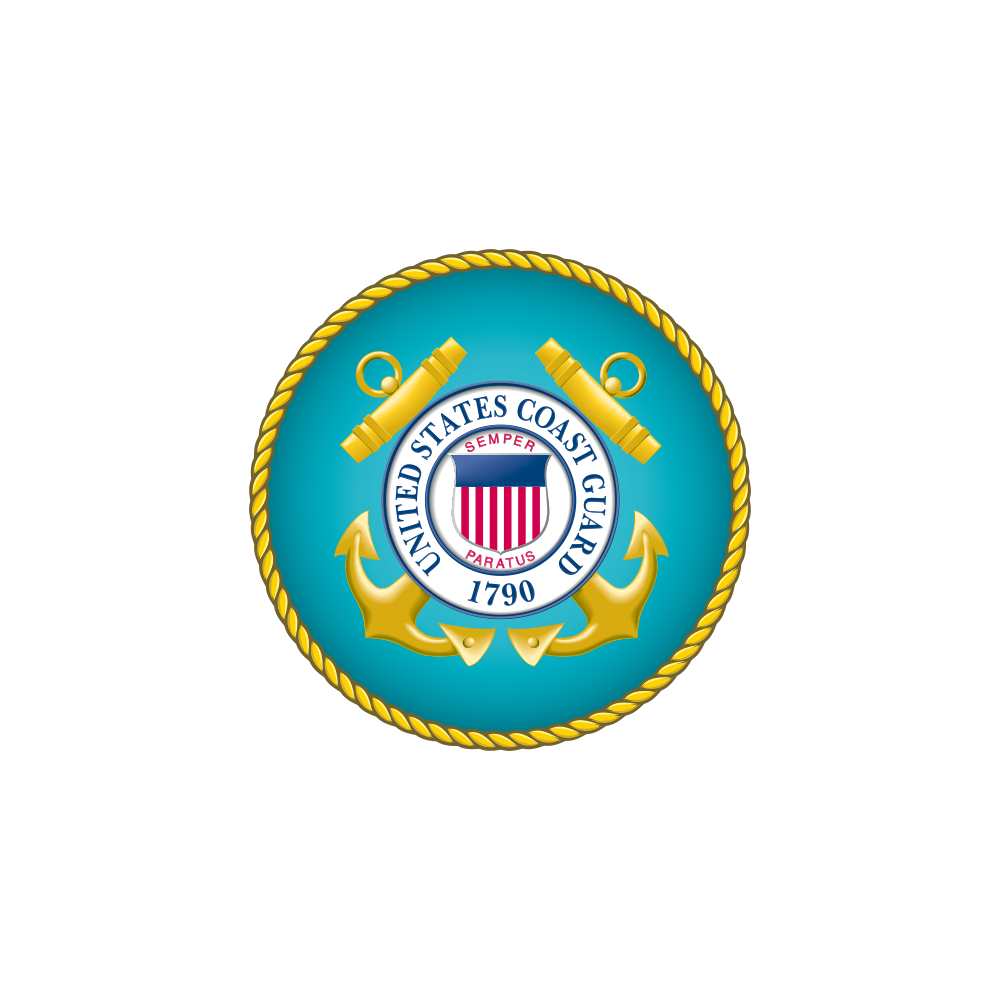
The U.S. Coast Guard logo is one of the most recognizable maritime service emblems in the United States. Representing the United States Coast Guard (USCG), the logo symbolizes vigilance, maritime safety, national defense, and humanitarian service. The Coast Guard is one of the nation’s oldest armed services, founded in 1790, and its emblem reflects centuries of dedication to protecting American waters and saving lives at sea.
From search-and-rescue missions to maritime law enforcement and environmental protection, the Coast Guard’s responsibilities are vast. The logo serves as the official visual identity appearing on vessels, aircraft, uniforms, and government documents.
Beyond official use, the emblem also carries deep symbolic value for service members and the public. It represents the organization’s commitment to its motto “Semper Paratus,” meaning “Always Ready.” The emblem therefore functions not only as a badge of authority but also as a symbol of courage, reliability, and service to the nation.
Logo History
The history of the U.S. Coast Guard emblem is closely tied to the evolution of the service itself.
Early Origins (1790)
The U.S. Coast Guard traces its origins to 1790, when the Revenue Marine Service was established to enforce customs laws and protect the nation’s coastline. The year 1790 is prominently displayed in the emblem to commemorate this founding.
Development of the Emblem
Over time, as the service expanded its responsibilities, the official emblem was standardized. The design was formally defined in federal regulations, specifying the arrangement of the shield, anchors, and surrounding text.
Modern Branding
In the 20th century, the Coast Guard further strengthened its visual identity through symbols such as the “Racing Stripe,” a red-white-blue diagonal mark introduced in the late 1960s to make Coast Guard vessels instantly recognizable worldwide.
Today, the official emblem remains largely unchanged, preserving the traditional symbolism while functioning effectively in modern branding and digital communication.
Design Meaning and Symbolism
The U.S. Coast Guard logo incorporates several powerful elements that represent the service’s mission and heritage.
The Central Shield
At the center of the emblem is a shield patterned after the United States flag, with a blue chief and red-and-white stripes. This symbolizes the Coast Guard’s role as a protector of the nation and its maritime borders.
Crossed Anchors
Behind the shield are two crossed anchors, representing the maritime environment in which the Coast Guard operates. The anchors signify stability, strength, and the service’s connection to the sea.
Circular Inscription
Encircling the emblem is a ring containing the words “United States Coast Guard” and the founding year 1790. This circular design symbolizes unity, continuity, and the service’s long tradition of guarding America’s coastlines.
Maritime Identity
The combination of naval imagery and national symbols highlights the Coast Guard’s dual role: a military branch and a humanitarian maritime service.
Color Philosophy
The U.S. Coast Guard logo uses a patriotic color palette closely aligned with the American flag.
Coast Guard Blue
Blue represents loyalty, honor, and authority, reflecting the service’s maritime strength and commitment to national security.
Rescue Red
Red symbolizes courage and urgency, referencing the dangerous rescue operations Coast Guard personnel frequently undertake.
White
White represents integrity, transparency, and dedication to service, emphasizing the Coast Guard’s mission to protect lives and uphold maritime law.
Together, these colors create a design that is both patriotic and highly visible, especially when used on vessels, aircraft, and uniforms.
Cultural and Institutional Significance
The U.S. Coast Guard logo is more than just a military insignia. It represents an organization that operates at the intersection of defense, safety, and humanitarian service.
Coast Guard members conduct missions ranging from search and rescue operations to environmental protection and maritime law enforcement. Their emblem has therefore become synonymous with reliability and rapid response in times of crisis.
The emblem’s appearance on ships and aircraft also signals authority at sea, reassuring civilians while deterring illegal maritime activity. Its enduring design reflects the proud tradition of a service that has protected American waters for over two centuries.
FAQs
What does the U.S. Coast Guard logo represent?
The logo represents the authority, heritage, and mission of the United States Coast Guard, symbolizing maritime safety, national defense, and lifesaving operations.
What does the shield in the logo mean?
The shield reflects the United States flag, representing patriotism and the Coast Guard’s role in defending the nation.
Why are there anchors in the emblem?
The crossed anchors symbolize maritime tradition and the Coast Guard’s responsibility for protecting waters and navigation.
What does the year 1790 signify?
The year marks the founding of the Coast Guard’s predecessor service, making it one of the oldest military organizations in the United States.
Where is the Coast Guard logo used?
The emblem appears on vessels, aircraft, uniforms, flags, and official documents as the identifying mark of the service.